Tag: light

  • Overcoming the World

    For Jews before Jesus there were two kinds of people, Jews and Gentiles, who were anyone not a Jew. The Law of Moses prescribed humane treatment of Gentiles in many ways, but only Jews were in Covenant with God, not Gentiles. 
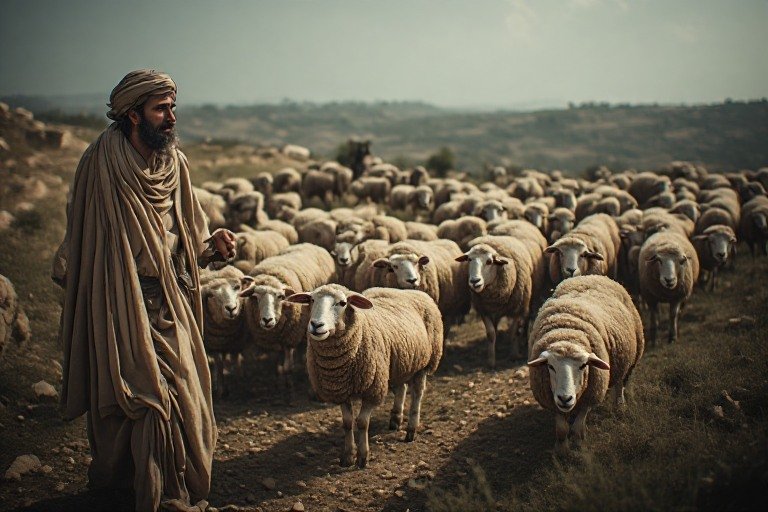
    With Jesus, this division was erased. After His death and resurrection there were still two kinds of people but now they were Christians, who believed Jesus was God incarnate and died for our sins, and everyone else. No one was born a Christian. One had to be “born again,” willing to give up one’s current life for one committed to God through Jesus. And doing so meant having eternal life with God. This was and is a matter of one’s heart.

    Reflecting on this deeply, many seemingly nonsensical things Jesus said make perfect sense:

    He who has his life, will lose it, but whoever loses his life for my sake will find it. (Matthew 16:25)

    Give to the one who asks you and do not turn away from the one who wants to borrow from you. (Matthew 5:38)

    …Do not resist an evil person. (Matthew 5:39)

    …love your enemies and pray for those who persecute you… (Matthew 5:43-48)

    The latter three relate to the fact that following Jesus or not is a matter of one’s heart. In the Covenant Jesus came to establish, God said:

    I will put my laws in their mind and inscribe them on their hearts…. And…they shall all know me, from the least of them to the greatest…. (Jeremiah 31:33-34)

    When we open our hearts to God through Jesus, this can happen. 

    And when we do as Jesus said, we act as God acts, who

    …makes his sun rise on the evil and on the good, and sends rain on the just and on the unjust. (Matthew 5:45)

    And when we act to resist others, we act to “have our life,” which is to “lose it.” (Matthew 16:25)

    Who then is deserving of exemption from our love? Of our charity? Of our willingness to give up our life that they might live?

    According to Jesus, no one, and He demonstrated this. 

    Thus, what does it mean to root for your country to defeat another country? For “bad people” to be treated unjustly or killed? For men wielding worldly powers to condemn and seek to harm certain groups of people? For the wealthy to be elevated at the expense of the poor? 

    I’d argue it means to be complicit in those acts, which are the opposite of Jesus’ teaching and example. This is not a matter of votes or policy, but a matter of heart. 

    In your heart, if one finds joy in things such as I have listed (a partial list), then one’s heart is growing cold. So long as one clings to the world, believing the world can be saved, that the fate of the U.S. or any country or any group is relevant to believing in and following Jesus, then letting go of the world is very, very difficult. 

    But let go is what we must do. For we need not fear death nor lawlessness nor anything in this life. 

    In this world you will have trouble. But take heart! I have overcome the world. (John 16:33)

    And because of Him, so has everyone who believes in Him.

  • Matthew 11:29

    Come to Me, all you who are weary and burdened, and I will give you rest. 29Take My yoke upon you and learn from Me, for I am gentle and humble in heart, and you will find rest for your souls. 30For My yoke is easy and My burden is light.

    This passage, from which the title of this blog is taken, has been interpreted in a variety of ways. Some interpret “yoke” to refer to what Jesus demands of his followers in comparison to what the religious leaders of His time demanded of Jews. This makes sense, in a way, since the latter demanded adherence to the Mosaic Laws, but also to many other rules that they created, often in efforts to clarify those laws. I have never found this convincing, though, as it doesn’t really address verse 29, and it defines “yoke is easy” and “burden is light” as what Jesus demands. Yet, Jesus demands difficult things, among them eschewing wealth, putting Him above father and mother and son and daughter, and giving up the life you know.

    Others interpret see this as referring to becoming like Him—or, as Paul put it, “grow up into Christ Himself.” (Ephesians 4:15) This makes more sense to me, as it accounts for “I am gentle and humble of heart” in verse 29 and for this to follow verse 27: “No one knows the Son except the Father, and no one knows the Father except the Son and those to whom the Son chooses to reveal Him.” Viewed this way suggests that Jesus then says, “Come, let me reveal the Father to you.”

    Perhaps, though, this interpretation does not invalidate the first one, but simply provides a deeper meaning. Whatever the case, this blog is based on Jesus’ yoke being His way of being and relating to life in this world. This is how it first came across to me and I remember being astonished that he could say “my yoke is easy and my burden is light” while knowing what was going to happen to Him before He left this world. And how could He say that and mean it?

    For me, this is revealed in Matthew 6, in several verses, but especially verses 22—

    22The eye is the lamp of the body. If your eyes are good, your whole body will be full of light.

    and 33—

    31Therefore do not worry, saying, ‘What shall we eat?’ or ‘What shall we drink?’ or ‘What shall we wear?’ 33For the Gentiles strive after all these things, and your heavenly Father knows that you need them. 33But seek first the kingdom of God and His righteousness, and all these things will be added unto you.

    34Therefore do not worry about tomorrow, for tomorrow will worry about itself. Today has enough trouble of its own.

    Jesus’ eyes were good and sought first the kingdom of God and His righteousness.

    I believe this is what he wanted us to do, which is not easy in this world. It wasn’t when He said these things and it has only become more difficult since.

    It is my hope that the things I right here will help whomever reads them to become more like Jesus.